Why Tight Hips Are Limiting Strength, Performance, and Recovery in Westhampton Beach
eeling “tight” through the hips has become incredibly common for active adults, runners, golfers, and lifters. We hear it all the time from people in Westhampton Beach and surrounding areas like Hampton Bays, Quogue, and Southampton:
“My hips always feel stiff.”
“I stretch constantly but nothing changes.”
“I loosen up temporarily, then it comes right back.”
For most people, the assumption is that tight hips automatically mean poor flexibility or mobility. As a result, they spend more and more time stretching, foam rolling, or chasing temporary relief. The problem is that tightness is not always a mobility issue.
In many cases, it’s actually the body’s response to instability, weakness, poor movement control, or compensation patterns that develop over time. If those underlying factors are never addressed, the tightness tends to keep returning no matter how much stretching someone does.
Why Tightness Isn’t Always a Mobility Problem
One of the biggest misconceptions surrounding movement and performance is the idea that every sensation of stiffness or restriction comes from muscles simply being “too tight.” Sometimes that’s true—but often it’s more complicated than that.
The body is constantly trying to create stability and protect itself during movement. If certain muscles or movement patterns aren’t functioning well, the nervous system will often create tension as a protective strategy. That tension is perceived as tightness.
This is especially common around the hips because they play such a large role in movement, force production, and load transfer throughout the body.
For example, someone with poor glute strength or limited control during single-leg movements may feel persistent tightness in the front or side of the hips. Another person may have adequate flexibility when stretching statically, but still feel restricted during squats, running, or rotational movements because they lack strength and control through those positions.
This is one of the reasons why stretching often creates only temporary improvements. The body doesn’t feel confident or stable enough to maintain that additional range of motion long term.
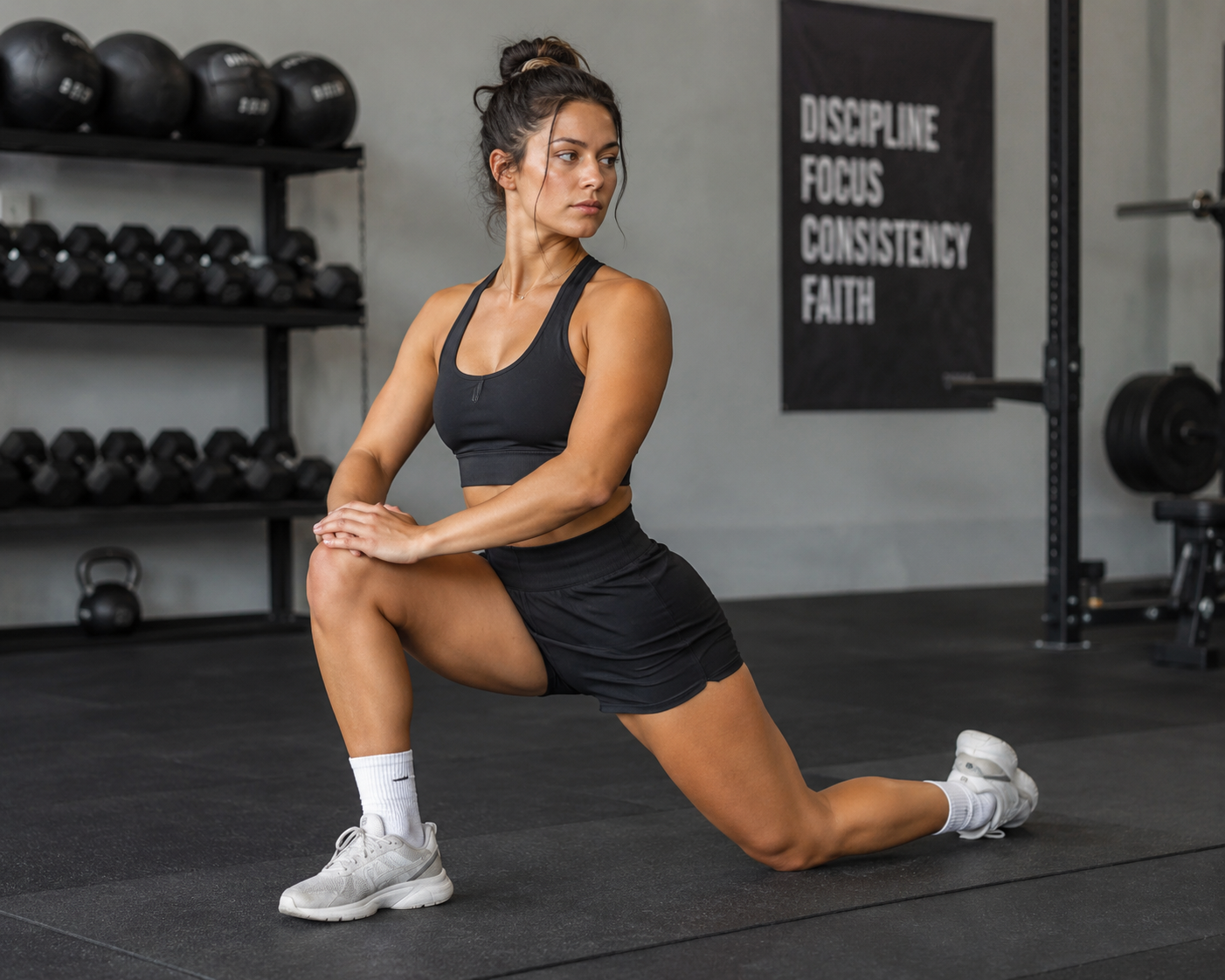
Why Stretching Alone Often Fails
Stretching absolutely has value. Mobility work can improve movement options, reduce stiffness temporarily, and help people feel better in the short term. But stretching by itself rarely solves the entire problem.
If the body lacks stability or strength through newly gained ranges of motion, it often returns to the same tension patterns fairly quickly. This is why many active individuals feel like they constantly need to stretch just to maintain the same baseline level of movement.
The issue is not necessarily a lack of mobility—it’s the inability to control and load that mobility effectively.
This becomes especially important for runners, golfers, and lifters because those activities place significant demands on the hips. Without adequate strength and control, the body compensates elsewhere.
Over time, this can contribute to:
Low back discomfort
Knee pain
Reduced power production
Difficulty recovering from training
Recurrent muscle tightness or overuse symptoms
In many cases, the hips themselves aren’t the only problem—they’re simply one part of a larger movement system that isn’t functioning efficiently.
How Hip Function Impacts Performance and Injury Risk
The hips are one of the primary drivers of force production and movement efficiency. They influence how the body absorbs force, transfers energy, and stabilizes during athletic activity. When hip function is limited, other areas are often forced to compensate.
We commonly see this in runners dealing with knee pain, golfers struggling with low back stiffness, or lifters who feel restricted at the bottom of squats and deadlifts.
In some cases, people continue training around these limitations for years without realizing how much energy is being lost through inefficient movement patterns.
This doesn’t always present as pain initially. Sometimes it simply shows up as:
Feeling stiff during warm-ups
Difficulty generating power
Reduced movement quality
Persistent soreness after activity
A feeling that the body “just doesn’t move well”
Addressing these issues requires more than passive treatment or generic mobility drills. It requires understanding how the individual actually moves under load.

What Actually Creates Lasting Change
For most active individuals, improving hip mobility and movement quality requires a combination of mobility, strength, stability, and progressive loading.
That process starts with understanding where the actual limitations exist.
At Active Pursuit Physical Therapy, this often involves assessing:
Hip mobility and range of motion
Strength and side-to-side asymmetries
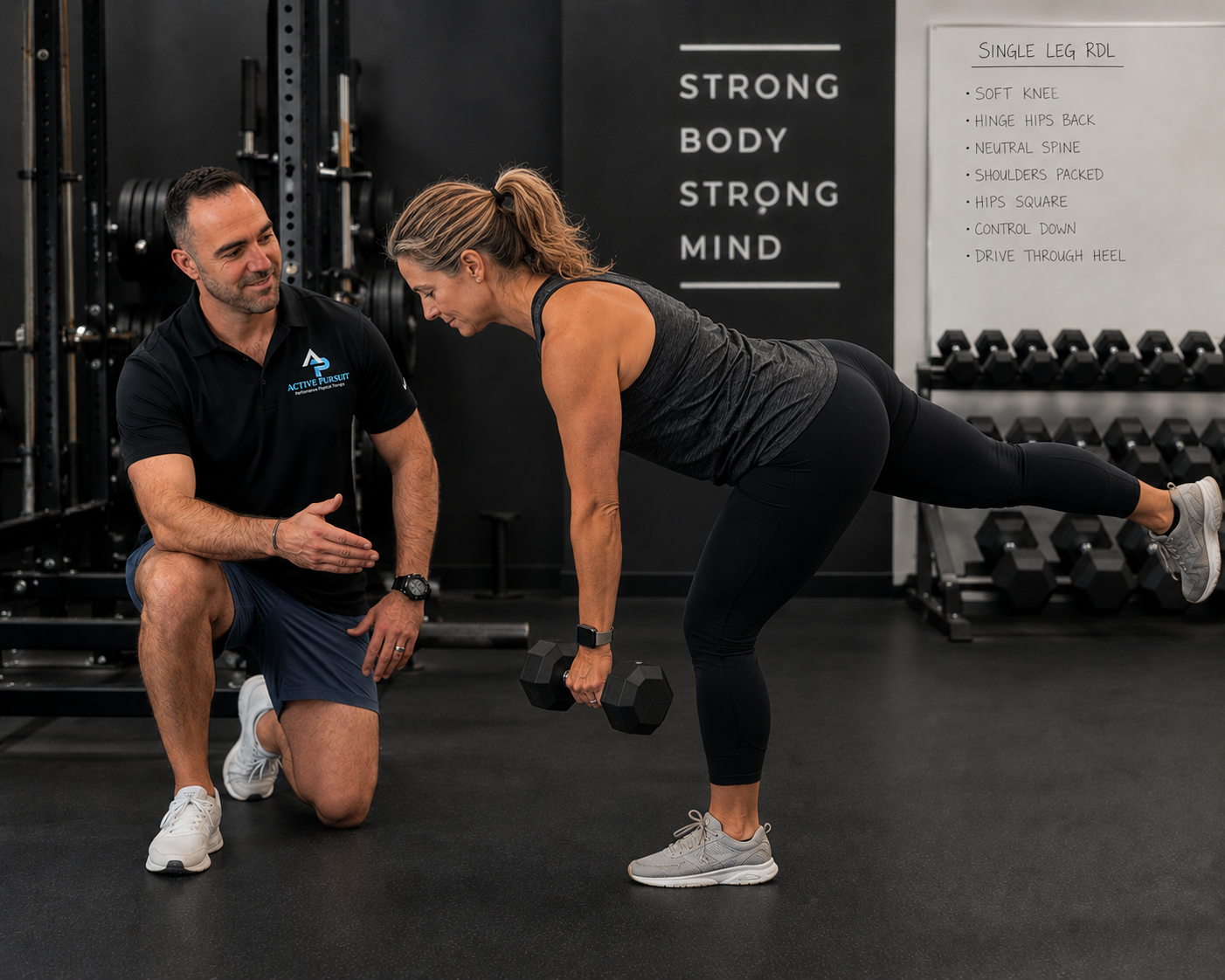
Single-leg stability and control
Movement quality during loaded patterns
Compensation strategies throughout the body
From there, the goal is not simply to “loosen things up,” but to improve the body’s ability to move efficiently and tolerate load confidently.
That may include:
Strengthening through deeper ranges of motion
Improving single-leg control and balance
Building rotational strength and stability
Progressively exposing the body to more demanding movement patterns
When strength and control improve, mobility often improves alongside it—and the constant feeling of tightness frequently decreases as a result. (Learn More)
Final Thoughts
Tight hips are not always a flexibility problem.
In many cases, they’re a sign that the body needs better strength, stability, movement control, or load management. That’s why stretching alone often fails to create lasting change.
A more effective approach focuses on improving how the body moves as a whole—not just temporarily reducing tension.
For active adults and athletes, that often leads not only to less discomfort, but also better performance, recovery, and long-term durability.
Start Improving How You Move
If you’re constantly dealing with hip tightness, movement restrictions, or recurring aches during training, there are two ways to get started:
Book an assessment directly and begin building a structured plan
Or schedule a quick call to discuss your situation and see if it’s the right fit
Active Pursuit Physical Therapy provides performance-focused physical therapy, sports rehab, and injury prevention services in Westhampton Beach and surrounding areas including Hampton Bays, Quogue, and Southampton.